
Published 22 September 2026
What a capture day actually looks like
Two to four hours on site, one person, and a space that carries on working around us. Here is the whole of it, start to finish.
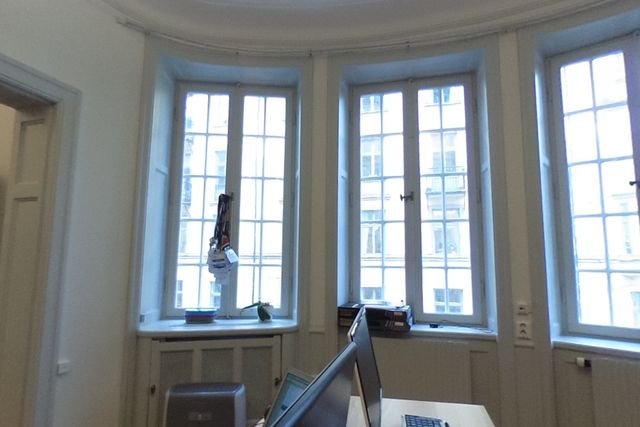
The question we are asked before every first booking is some version of "how disruptive is this?" The honest answer is: less than a photoshoot, and nothing like a building survey. One person arrives, works through the space on a tripod, and leaves. Most clients carry on trading around us.
Before the day
A scoping call, usually fifteen minutes. We want to know how big the space is, how many rooms matter, and whether anything in it is confidential or commercially sensitive. That call is what the quote is built from, and the quote is fixed before we start — it is not adjusted afterwards.
You get a short list of what helps:
- The space reasonably tidy, because the camera sees everything
- Lights working, including the ones nobody turns on
- Someone who can let us in and point at the doors we should not open
- Screens off, or showing something you are happy to publish
The capture
The camera stands in one spot, takes a bracketed set of exposures, and moves on. Each of those spots is a capture point, and a tour is a set of them linked so a visitor can walk between them. We reckon on roughly one capture point per 35 m², never fewer than six — a one-room clinic and a 900 m² showroom are the same job done a different number of times.
A typical building tour is two to four hours on site. Nothing is edited there; the processing happens afterwards.
After the day
The capture becomes a navigable tour, a measured floor plan, edited stills you can use anywhere a photograph goes, and a vertical video for social. You see it on a private link before anyone else does, and one round of revisions is included: retaking a viewpoint, moving a hotspot, fixing a label.
Then it goes live — on your own site, embedded wherever you want it, and published to your Google Business Profile.